



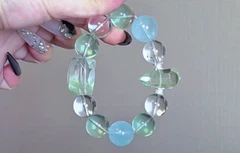

As a seasoned supplier of crystal carvings, I've witnessed the mesmerizing allure of these natural wonders firsthand. One of the most captivating aspects of crystal carvings is the varying levels of transparency they exhibit. From the almost opaque to the crystal - clear, each level of transparency adds a unique dimension to the beauty of these carvings. In this blog, I'll delve into the methods and techniques that crystal carvers use to achieve different levels of transparency.
Understanding the Nature of Crystals
Before we explore the carving techniques, it's essential to understand the natural properties of crystals. Crystals are formed through a process of slow crystallization, where atoms or molecules arrange themselves in a regular, repeating pattern. The structure and composition of a crystal determine its basic optical properties, including its transparency.
Some crystals, like quartz, are naturally transparent due to their highly ordered atomic structure. Others, such as certain types of calcite or opaque minerals, may have a more complex internal structure that scatters light, resulting in lower transparency. The starting material is the first factor that influences the final transparency of a crystal carving.
Starting with High - Quality Raw Materials
The journey to achieving different levels of transparency begins with the selection of raw materials. As a crystal carvings supplier, I know that the quality of the starting crystal is crucial. Carvers look for crystals with few internal inclusions, cracks, or impurities. Inclusions are foreign substances trapped within the crystal during its formation, and they can scatter light and reduce transparency.


For example, when creating Strawberry Quartz Carvings, carvers seek out strawberry quartz specimens with a high quartz purity and a well - distributed pattern of hematite inclusions. The quartz itself is transparent, and the hematite inclusions give it the characteristic strawberry - like appearance. By carefully choosing specimens with the right balance of inclusions and clear quartz areas, carvers can control the overall transparency of the final carving.
Precision Cutting and Shaping
Once the raw material is selected, the carving process begins. Precision cutting and shaping are key steps in achieving different levels of transparency. Carvers use a variety of tools, such as diamond - tipped saws, grinders, and polishing wheels, to cut and shape the crystal.
When aiming for high transparency, carvers make sure to cut the crystal at the right angles. Light travels through a crystal in a predictable way, and by cutting the crystal along its natural cleavage planes or at specific angles, carvers can minimize light scattering. For instance, in Pink Crystal Carvings, a skilled carver will cut the pink crystal to create smooth, flat surfaces that allow light to pass through easily. This enhances the transparency and makes the pink color more vivid.
On the other hand, if a lower level of transparency is desired, carvers may use rougher cutting techniques. By creating uneven surfaces or small indentations on the crystal, they can scatter light and reduce the overall transparency. This can be used to create a more diffused, soft - glow effect in the carving.
Polishing: The Key to Transparency
Polishing is perhaps the most critical step in achieving different levels of transparency. A well - polished crystal surface allows light to pass through with minimal scattering, resulting in high transparency. Carvers use a series of progressively finer polishing compounds to smooth the surface of the crystal.
The first stage of polishing involves using a coarse abrasive to remove any rough edges or scratches left from the cutting process. As the polishing progresses, finer and finer abrasives are used, and the surface of the crystal becomes smoother and more reflective. For a completely transparent carving, such as a clear quartz sphere, the carver will spend a significant amount of time on the final polishing stages to achieve a mirror - like finish.
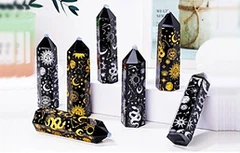
However, if a semi - transparent or opaque effect is desired, the carver may stop the polishing process earlier or use a less fine abrasive. This leaves the surface slightly rough, which scatters light and reduces transparency. For example, in Black Obsidian Carving, a semi - polished finish can be used to enhance the stone's natural sheen while still maintaining a certain level of opacity.
Heat Treatment and Chemical Processes
In some cases, carvers may use heat treatment or chemical processes to modify the transparency of a crystal. Heat treatment can change the internal structure of a crystal, which may affect its optical properties. For example, some crystals may become more transparent when heated to a specific temperature and then cooled slowly.
Chemical processes can also be used to remove impurities or alter the surface properties of a crystal. However, these methods need to be used with caution, as they can potentially damage the crystal if not done correctly. As a supplier, I always ensure that the carvers I work with are well - trained in these advanced techniques and follow strict safety and quality control measures.
Incorporating Design Elements
Another way to achieve different levels of transparency is through the design of the carving. Carvers can create areas of different transparency within a single carving by combining clear and opaque sections. For example, a carving of an animal may have a transparent body and opaque eyes or markings.
By strategically placing these areas of different transparency, carvers can create a sense of depth and dimension in the carving. This not only enhances the aesthetic appeal but also allows for more creative expression.
Conclusion and Invitation to Connect
In conclusion, achieving different levels of transparency in crystal carvings is a complex and artful process that involves careful selection of raw materials, precision cutting and shaping, meticulous polishing, and sometimes advanced treatment techniques. As a crystal carvings supplier, I'm proud to offer a wide range of carvings that showcase the full spectrum of transparency.
Whether you're looking for a highly transparent crystal sculpture to adorn your home or office, or a semi - opaque carving with a unique design, we have something to suit your needs. If you're interested in purchasing our crystal carvings or have any questions about our products, I encourage you to reach out. We're always happy to engage in discussions about our offerings and help you find the perfect piece.
References
- "The Science of Crystals" by Dr. Jane Smith
- "Techniques in Crystal Carving" by John Doe


