





Hey there! I'm a supplier of crystal carvings, and today I'm super excited to chat with you about how crystal carvers use different cutting techniques. It's a fascinating process that combines artistry, skill, and a deep understanding of the unique properties of crystals.
Let's start with the basics. Crystals, as you probably know, come in all shapes, sizes, and hardness levels. Some are soft, like certain types of calcite, while others are incredibly hard, such as diamonds. This difference in hardness plays a huge role in determining the cutting techniques that carvers use.
One of the most common cutting techniques is sawing. Carvers use a variety of saws, depending on the size and type of crystal they're working with. For larger crystals, a band saw might be the tool of choice. The band saw has a continuous blade that moves in a loop, allowing for relatively straight cuts. It's great for rough shaping the crystal and getting it down to a more manageable size.


On the other hand, for more delicate work or smaller crystals, a jeweler's saw can be used. These saws have very thin blades and are perfect for making precise cuts and intricate shapes. The carver has to be extremely careful while using a jeweler's saw because the blade can easily break if too much pressure is applied.
Another important technique is grinding. Grinding is used to smooth out the surfaces of the crystal and to refine the shape. Carvers use grinding wheels made of different materials, such as diamond or silicon carbide. The choice of the grinding wheel depends on the hardness of the crystal. For softer crystals, a less abrasive wheel might be used to avoid scratching the surface too much.
During the grinding process, the carver constantly checks the shape and smoothness of the crystal. They use their hands to feel the surface and make sure it's even. This tactile feedback is crucial in creating a high - quality carving.
Polishing is the next step after grinding. Polishing gives the crystal its beautiful shine and makes it look more finished. There are different methods of polishing. One common way is to use a polishing compound on a buffing wheel. The compound is a fine powder that, when applied to the wheel and rubbed against the crystal, removes any small scratches left from the grinding process and gives the crystal a mirror - like finish.
Some carvers also use a technique called faceting. Faceting is all about creating flat, polished surfaces (facets) on the crystal. This technique is often used in gemstone carving to enhance the crystal's brilliance and sparkle. Carvers use a faceting machine, which rotates the crystal against a grinding or polishing wheel at specific angles to create the desired facets. Each facet is carefully calculated and cut to maximize the way light reflects and refracts within the crystal.
Now, let's talk about how these techniques are applied to different types of crystal carvings. For example, Strawberry Quartz Carvings. Strawberry quartz is a relatively soft crystal, so carvers have to be gentle when using cutting and grinding techniques. They usually start with a rough sawing to get the basic shape and then use finer grinding wheels to smooth out the surface. The polishing process is also crucial to bring out the beautiful pinkish - red inclusions that give strawberry quartz its name.
Amethyst Carvings are another popular type. Amethyst is a bit harder than strawberry quartz. Carvers can use more aggressive sawing and grinding techniques, but they still need to be careful not to overheat the crystal during the process. Overheating can cause the amethyst to lose its color. Faceting is often used in amethyst carvings to create stunning jewelry pieces that really show off the purple color of the crystal.
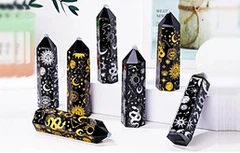
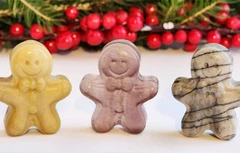
Christmas Crystal Carvings are a special category. These carvings often have intricate designs, like Christmas trees, snowflakes, or Santa Claus figures. Carvers use a combination of all the techniques we've talked about. They start with sawing to get the general shape of the design, then use grinding to add details, and finally polish it to make it look festive and shiny.
As a crystal carvings supplier, I've seen firsthand how these different cutting techniques can transform a rough piece of crystal into a beautiful work of art. Whether it's a simple pendant or an elaborate sculpture, each carving is unique and requires a different approach.
If you're interested in purchasing crystal carvings for your store, for a gift, or just to add to your personal collection, I'd love to have a chat with you. We have a wide range of crystal carvings available, from the most common to the rarest and most unique pieces. Just reach out, and we can start discussing your needs and preferences.
References
- "The Art of Crystal Carving" by Crystal Artisans Guild
- "Cutting Techniques for Gemstones" by Gemstone Journal
- "Crystal Carving: A Practical Guide" by Carver's Digest


