


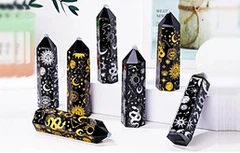



Hey there! As a supplier of crystal carvings, I've always been fascinated by the way these beautiful pieces react under different lighting conditions. One of the most interesting and visually stunning scenarios is when crystal carvings are exposed to ultraviolet (UV) light. In this blog post, I'll share my insights and experiences on how crystal carvings look under UV light.
First off, let's talk a bit about what UV light is. UV light is a type of electromagnetic radiation that's invisible to the human eye. It has a shorter wavelength than visible light, which gives it some unique properties. There are three types of UV light: UVA, UVB, and UVC. UVA has the longest wavelength and is the least harmful, while UVC has the shortest wavelength and is the most dangerous. When it comes to looking at crystal carvings, we usually use UVA light, which is often found in black lights.
Now, let's get to the good stuff - how crystal carvings look under UV light. Different types of crystals have different reactions to UV light, and it's really amazing to see the transformation.
Quartz - The All - Rounder
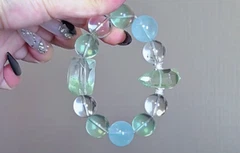
Quartz is one of the most common types of crystals used in carvings. Under normal light, quartz carvings are already beautiful, with their clear or colored appearance. But when you shine a UV light on them, they come alive. Clear quartz can fluoresce, which means it emits visible light when exposed to UV light. The fluorescence can range from a soft blue - white glow to a more intense, bright glow, depending on the impurities in the quartz.
Some White Crystal Carvings made of quartz may have a very subtle glow, almost like a gentle aura around the carving. This is because pure quartz has few impurities, and the glow is mainly due to the natural structure of the crystal. On the other hand, if the quartz has some trace elements like manganese or iron, the glow can be much more vibrant. You might see a pinkish or yellowish hue added to the blue - white glow, creating a multi - colored effect that's truly mesmerizing.
Citrine - The Golden Gem
Citrine is a variety of quartz that's known for its beautiful yellow to orange color. Under normal light, citrine carvings look like little pieces of sunshine. But under UV light, they have a completely different charm. Citrine Carvings can show a range of fluorescence. Some citrine may have a weak yellowish or greenish glow, while others can have a more intense, golden - orange glow.
The color of the glow depends on the origin of the citrine and the impurities present. Natural citrine, which is relatively rare, may have a more subtle and natural - looking glow. Heat - treated citrine, which is more common in the market, can sometimes have a slightly different fluorescence pattern. The UV light can reveal the internal structure of the citrine, highlighting any inclusions or growth patterns that are not as visible under normal light.
Amethyst - The Purple Beauty
Amethyst is another popular choice for crystal carvings. Its deep purple color is already eye - catching, but under UV light, it becomes even more spectacular. Amethyst can fluoresce in different shades, from a pale pink to a bright purple. The fluorescence is caused by the presence of trace elements such as iron and manganese in the crystal structure.


Some high - quality amethyst carvings may have a strong, vivid purple glow that seems to radiate from within the crystal. This creates a very dramatic and otherworldly effect. You can see the details of the carving more clearly under UV light, as the glow enhances the contrast between the different parts of the carving. It's like looking at a hidden world inside the amethyst.
The Impact of Carving Details
The details of the crystal carving also play a big role in how it looks under UV light. Intricate carvings with lots of small features can create a more interesting visual effect. The UV light can highlight the edges and curves of the carving, making it look more three - dimensional. For example, a Crystal Goddess Carving with fine details of the goddess's features and flowing robes will look even more stunning under UV light. The light can catch on the different surfaces of the carving, creating areas of light and shadow that add depth and character.
On the other hand, simpler carvings may have a more uniform glow, but they can still be very beautiful in their own way. A simple sphere or cube made of crystal can have a soft, even glow that gives it a peaceful and elegant appearance.
Practical Applications
The way crystal carvings look under UV light isn't just for aesthetic purposes. It can also be used for authentication and quality assessment. Some fake crystals may not fluoresce in the same way as real ones under UV light. By using a UV light, experts can quickly identify if a crystal carving is genuine or not.
In addition, the fluorescence can also give clues about the quality and origin of the crystal. Different regions may produce crystals with slightly different fluorescence patterns, which can help in determining where the crystal came from.
Creating a Display
If you're a collector or a retailer, creating a display with UV light can be a great way to showcase your crystal carvings. You can use black lights in a display case to make the carvings stand out. The contrast between the dark background and the glowing crystals is really striking. You can also experiment with different angles of the UV light to create different effects. For example, shining the light from below can make the carving look like it's floating, while shining it from the side can enhance the shadows and highlights.
Conclusion
In conclusion, crystal carvings look absolutely amazing under UV light. The different types of crystals, from quartz to citrine and amethyst, each have their own unique fluorescence and visual appeal. The details of the carving also add to the overall effect, creating a beautiful and often otherworldly display.
If you're interested in adding some of these stunning crystal carvings to your collection or starting a business with them, I'd love to have a chat. Whether you're looking for a specific type of crystal or a custom - made carving, I can help you find the perfect pieces. Just reach out, and we can start discussing your needs and preferences.
References
- "The Handbook of Fluorescence Spectroscopy and Imaging" by Jörg Enderlein, Stefan W. Hell, and Jörg Enderlein
- "Gemstones: Facts at Your Fingertips" by Kristin H. Hutchison


