





As a supplier of Amethyst Carvings, I often encounter customers who are eager to learn how to determine the authenticity of these beautiful pieces. Amethyst, with its stunning purple hues, has long been a favorite among crystal enthusiasts and collectors. However, the market is flooded with both genuine and fake amethyst carvings, making it crucial for buyers to know how to spot the real deal. In this blog post, I'll share some practical tips and insights that can help you distinguish authentic amethyst carvings from imitations.
Understanding Amethyst
Before diving into the authentication process, it's essential to have a basic understanding of amethyst. Amethyst is a variety of quartz that gets its purple color from trace amounts of iron and other impurities. It forms in geodes and cavities within volcanic rocks, and its color can range from pale lavender to deep violet. High - quality amethyst often has a rich, saturated color and good clarity.
Visual Inspection
One of the first steps in determining the authenticity of an amethyst carving is a visual inspection.
Color
Genuine amethyst typically has a natural color distribution. The color is often uneven, with variations in intensity and tone. You may notice that the color is more concentrated in some areas and lighter in others. This is due to the way the crystal forms in nature. In contrast, fake amethyst carvings may have a very uniform color, which can be a sign of dyeing. For example, if you see an amethyst carving with a perfectly even purple color throughout, it's likely to be an imitation.
Inclusions
Natural amethyst often contains inclusions, which are tiny imperfections or foreign substances trapped inside the crystal during its formation. These inclusions can look like small bubbles, threads, or even small crystals within the amethyst. Inclusions are a strong indicator of authenticity because they are difficult to replicate in synthetic or fake crystals. On the other hand, a carving that is completely free of inclusions and has a flawless appearance may be suspect.
Clarity
While amethyst can have varying degrees of clarity, most natural amethyst is not perfectly clear. It may have some internal fractures or cloudiness. If a carving is extremely clear and lacks any natural imperfections, it could be a sign that it's not genuine. However, high - grade amethyst with good clarity can also exist, so clarity alone is not a definitive indicator.
Physical Properties
In addition to visual inspection, you can also test some of the physical properties of the amethyst carving.
Hardness
Amethyst has a hardness of 7 on the Mohs scale, which means it is relatively hard. You can perform a simple scratch test (although this should be done with caution as it may damage the carving). Try to scratch the surface of the carving with a material that has a lower hardness, such as a copper coin (which has a hardness of around 3 - 4). If the amethyst is genuine, it should not be scratched by the coin. However, if it scratches easily, it may be a fake made of a softer material.
Density
Genuine amethyst has a specific density. You can estimate the density by comparing the weight of the carving with its size. Amethyst is denser than many common materials used to make fake carvings. If a carving feels unusually light for its size, it may not be real amethyst. However, accurately measuring density requires specialized equipment, so this method is more of a rough estimate.
Thermal Conductivity
Amethyst has unique thermal conductivity properties. Real amethyst will feel cool to the touch, and it will take some time to warm up when held in your hand. Fake amethyst, especially those made of plastic or glass, will warm up much more quickly. This is a simple and easy test that you can do on the spot.
Professional Testing
If you're still unsure about the authenticity of an amethyst carving, it may be worth getting it tested by a professional gemologist. Gemologists have access to advanced testing equipment, such as spectrometers and refractometers, which can accurately determine the chemical composition and optical properties of the crystal. They can provide a detailed report on whether the carving is genuine amethyst or not.

Comparison with Other Crystal Carvings
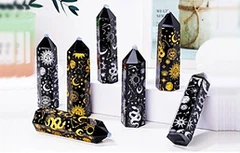
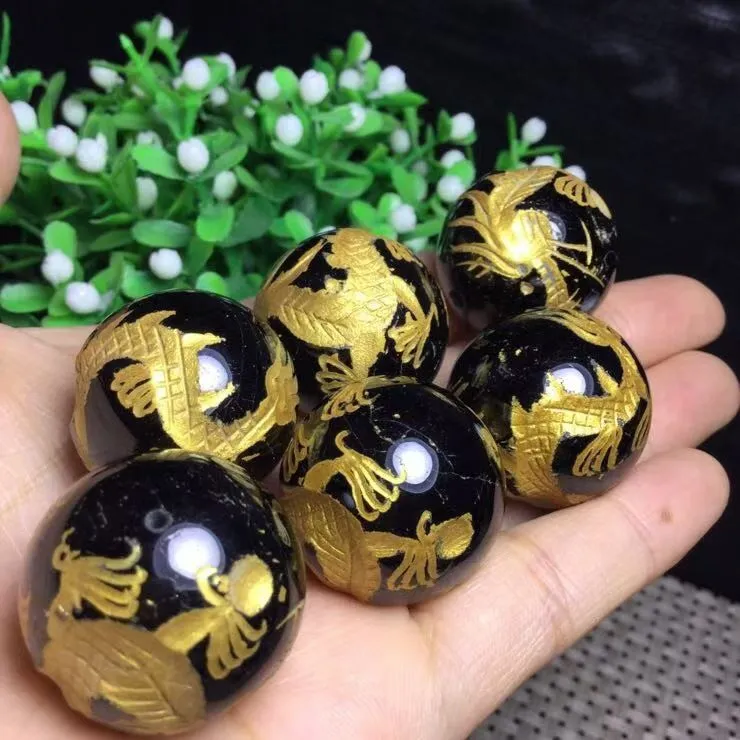
As a supplier of crystal carvings, I also deal with other types of crystals, such as White Crystal Carvings, Black Tourmaline Carving, and Crystal Goddess Carving. Comparing the amethyst carving with these other genuine crystal carvings can give you a better sense of what real amethyst should look and feel like. You can observe the differences in color, hardness, and other properties between amethyst and these other crystals.
Conclusion
Determining the authenticity of amethyst carvings requires a combination of visual inspection, testing of physical properties, and, if necessary, professional evaluation. By paying attention to details such as color, inclusions, hardness, density, and thermal conductivity, you can become more confident in your ability to spot genuine amethyst.

If you're interested in purchasing high - quality amethyst carvings or any other crystal carvings, I encourage you to reach out for a procurement discussion. I'm always happy to provide more information, answer your questions, and help you find the perfect pieces for your collection or business.
References
- "Gem Identification: An Introduction" by Richard T. Liddicoat.
- "The Encyclopedia of Crystals" by Judy Hall.


