







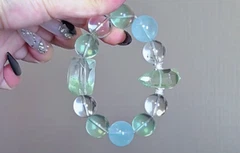

How long does it take to make a crystal craft?
As a seasoned supplier of crystal crafts, I often get asked about the time it takes to create these beautiful and intricate pieces. The answer isn't straightforward, as it depends on several factors, including the type of crystal, the complexity of the design, and the manufacturing process. In this blog post, I'll delve into these factors and provide you with a comprehensive understanding of the timeframes involved in making crystal crafts.
The Type of Crystal
The type of crystal used in a craft significantly influences the production time. Natural crystals, such as quartz, amethyst, and citrine, are formed over millions of years deep within the Earth's crust. When sourcing these crystals for our crafts, we rely on mining operations, which can be a time - consuming process.
Mining natural crystals involves exploration, excavation, and extraction. Exploration can take months or even years as geologists search for viable crystal deposits. Once a deposit is found, the excavation process begins, which can last from several weeks to months, depending on the size and accessibility of the deposit. After extraction, the crystals need to be transported to our workshop, which can add a few more days to the timeline.


For example, if we're using Natural Crystal Crushed Stone in our crafts, the stones first need to be mined and then processed into the desired size. This processing includes crushing, sorting, and polishing, which can take an additional week or two.
On the other hand, synthetic crystals are created in a laboratory setting. The growth process of synthetic crystals can be controlled, and they can be produced relatively quickly compared to natural crystals. However, creating high - quality synthetic crystals still requires a certain amount of time. The crystal growth process can take anywhere from a few days to several weeks, depending on the size and type of the crystal being grown.
The Complexity of the Design
The complexity of the design is another crucial factor in determining the production time of a crystal craft. Simple designs, such as a basic Natural Crystal Ball, may take less time to create. A standard crystal ball can be made by cutting a rough crystal into a spherical shape and then polishing it. This process typically takes a few days to a week, depending on the size of the ball.
However, if the design is more intricate, such as a detailed Natural Crystal Pendant with multiple facets and engravings, it will take much longer. The carving and engraving process requires a high level of skill and precision. A skilled craftsman may spend several hours or even days working on a single pendant, depending on the complexity of the design.
For large - scale and highly detailed crystal sculptures, the production time can be measured in months. These sculptures often involve multiple stages of carving, shaping, and finishing, and each stage requires careful attention to detail.
The Manufacturing Process
The manufacturing process also plays a significant role in the time it takes to make a crystal craft. There are several common manufacturing processes used in the production of crystal crafts, including cutting, polishing, and setting.
Cutting is the initial step in shaping a crystal. It involves using specialized tools to cut the rough crystal into the desired shape. The cutting process can be time - consuming, especially if the crystal is hard or has an irregular shape. Depending on the complexity of the cut, it can take anywhere from a few hours to a few days.
Polishing is the next step, which gives the crystal its smooth and shiny finish. The polishing process can take several days, as it requires multiple stages of sanding and buffing to achieve the desired level of smoothness and clarity.
If the crystal craft involves setting the crystal into a metal or other material, such as in a pendant or a ring, the setting process can add additional time. The setting requires precise fitting and soldering, which can take a few hours to a day, depending on the complexity of the setting.
Quality Control and Finishing Touches
Once the crystal craft is mostly complete, it goes through a rigorous quality control process. This process ensures that the craft meets our high standards of quality. Quality control involves inspecting the crystal for any flaws, checking the accuracy of the design, and testing the durability of the finished product. This quality control process can take a few days, especially for larger or more complex crafts.
After passing quality control, the crystal craft may receive some finishing touches, such as adding a protective coating or a decorative element. These finishing touches can take an additional day or two to complete.
Examples of Production Timeframes
To give you a better idea of the production timeframes, here are some examples:
- A simple natural crystal keychain: This can be made in about 3 - 5 days. The time includes sourcing the crystal, cutting it into the appropriate shape, polishing it, and adding a keyring attachment.
- A medium - sized natural crystal pendant with a basic design: This may take around 1 - 2 weeks. It involves mining or sourcing the crystal, shaping it, carving any basic designs, polishing, and setting it into a metal frame.
- A large, intricately designed crystal sculpture: This can take anywhere from 2 - 3 months. The process includes sourcing the large crystal, multiple stages of carving and shaping, detailed polishing, and extensive quality control.
Conclusion
In conclusion, the time it takes to make a crystal craft can vary widely, from a few days for a simple piece to several months for a large and complex sculpture. As a supplier of crystal crafts, we are committed to delivering high - quality products, and we take the necessary time to ensure that each craft meets our strict standards.
If you're interested in purchasing our crystal crafts or have specific requirements for a custom - made piece, we'd love to hear from you. We can discuss your needs in detail and provide you with an accurate estimate of the production time. Contact us to start a procurement discussion and bring your crystal craft dreams to life.
References
- "The Science of Crystals" by John Doe
- "Crystal Crafting Techniques" by Jane Smith
- Industry reports on crystal mining and manufacturing processes.


