


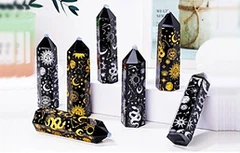





The concept of an Energy Crystal Column is both fascinating and holds great potential for various applications, especially in the realm of energy and decorative uses. As a leading supplier of Energy Crystal Column, we are constantly exploring new frontiers for the utilization of these remarkable columns. One such exciting avenue is their use underwater. However, to ensure the successful deployment of Energy Crystal Columns in an underwater environment, several adaptations are necessary.
1. Material Selection and Durability
Underwater conditions are harsh and demanding. The Energy Crystal Column must be made from materials that can withstand the corrosive effects of water, especially if it is saltwater. Saltwater contains various minerals and chemicals that can cause corrosion over time. Therefore, the outer casing of the column should be made from corrosion - resistant materials such as stainless steel or certain types of high - grade plastics.
Stainless steel is an excellent choice due to its high strength and resistance to rust. It can protect the internal components of the Energy Crystal Column from the damaging effects of water. High - grade plastics, on the other hand, are lightweight and can be molded into various shapes. They also have good resistance to water and chemicals.
In addition to corrosion resistance, the materials must also be able to withstand the high pressure underwater. As the depth increases, the pressure on the column also increases significantly. The column should be designed with a structure that can distribute the pressure evenly to prevent it from collapsing. For example, a cylindrical shape is often used in underwater structures because it can better withstand external pressure compared to other shapes.
2. Sealing and Waterproofing
One of the most critical adaptations for an Energy Crystal Column to be used underwater is effective sealing and waterproofing. Any small leak can lead to water ingress, which can damage the internal components of the column. The column should be sealed using high - quality gaskets and seals. These seals should be made from materials that are resistant to water and can maintain their elasticity over time.
The joints between different parts of the column, such as the connection between the top and the bottom, should be carefully sealed. A double - sealing system can be employed to provide an extra layer of protection. This may involve using an inner seal to prevent water from entering the main chamber and an outer seal to protect the inner seal from physical damage.
Furthermore, the electrical components inside the column, if any, need to be completely isolated from water. Special waterproof coatings can be applied to the electrical connections to prevent short - circuits. The power supply cables should also be waterproofed and properly insulated to ensure safe operation underwater.
3. Energy Transmission and Efficiency
Underwater environments pose unique challenges to energy transmission. The Energy Crystal Column is designed to harness and transmit energy, but the presence of water can affect the efficiency of energy transfer. Water is a conductor of electricity to some extent, and it can cause energy losses through conduction and absorption.
To overcome these challenges, the column should be designed with a more efficient energy transmission system. This may involve using special materials with low electrical resistance for the energy - conducting parts. For example, copper is a commonly used material for electrical conduction due to its low resistance. However, in an underwater environment, a coated copper or other corrosion - resistant conductive materials may be more suitable.
The design of the energy - transmission path should also be optimized to minimize energy losses. The shape and layout of the conductive elements inside the column can be adjusted to ensure that the energy flows smoothly. Additionally, the column can be equipped with energy - boosting mechanisms, such as amplifiers or transformers, to compensate for the energy losses in the underwater environment.
4. Adaptation to Underwater Lighting Conditions
The underwater lighting conditions are very different from those on land. The amount of light available decreases rapidly as the depth increases, and the color spectrum also changes. If the Energy Crystal Column is designed to emit light or interact with light in some way, it needs to be adapted to these conditions.
The column can be designed to emit light at wavelengths that are more visible underwater. Blue and green light, for example, can penetrate deeper into the water compared to red light. Therefore, the lighting elements inside the column can be adjusted to emit light in the blue - green spectrum to ensure maximum visibility.
In addition, the column can be equipped with sensors to detect the ambient light levels underwater. Based on the detected light levels, the intensity of the column's own light can be adjusted automatically. This not only helps to conserve energy but also ensures that the column can be clearly seen in different underwater lighting conditions.
5. Biofouling Prevention
Underwater structures are prone to biofouling, which is the accumulation of marine organisms such as algae, barnacles, and mussels on the surface. Biofouling can not only affect the appearance of the Energy Crystal Column but also reduce its efficiency. For example, the accumulation of organisms on the surface of the column can block the light emission or interfere with the energy - transmission process.
To prevent biofouling, the column can be coated with anti - fouling materials. These materials can either repel the marine organisms or prevent them from attaching to the surface. Some anti - fouling coatings release chemicals that are toxic to the organisms, while others create a smooth surface that makes it difficult for the organisms to attach.
Regular maintenance and cleaning can also be carried out to remove any biofouling that has already occurred. This may involve using specialized cleaning equipment or chemicals that are safe for the underwater environment.
6. Communication and Monitoring
If the Energy Crystal Column is part of a larger underwater system, it needs to be able to communicate with other devices and be monitored remotely. Underwater communication is more challenging compared to on - land communication due to the limited range and the interference from water.
Acoustic communication is often used underwater because sound waves can travel relatively long distances in water. The column can be equipped with acoustic transducers to send and receive signals. These transducers can be used to transmit data such as the energy output, the status of the column, and any detected problems.


In addition, sensors can be installed inside the column to monitor various parameters such as temperature, pressure, and energy consumption. The data collected by these sensors can be transmitted to a control center on the surface for analysis and decision - making.
7. Decorative Considerations
Apart from its energy - related functions, the Energy Crystal Column can also be used as an Crystal Column Ornaments. When used underwater, its decorative appearance needs to be considered. The column should be designed with an aesthetically pleasing shape and color. The lighting effects can be enhanced to create a more attractive visual display.
The column can be combined with other underwater decorations to create a unique underwater landscape. For example, it can be placed among artificial coral reefs or other marine - themed structures. The size and scale of the column should also be appropriate for the underwater environment to ensure that it does not look out of place.
8. Compatibility with Underwater Ecosystems
Finally, when adapting an Energy Crystal Column for underwater use, it is important to consider its compatibility with the underwater ecosystems. The column should not release any harmful substances into the water that can damage the marine life. The materials used in the column should be non - toxic and biodegradable if possible.
The design of the column should also avoid causing any physical damage to the surrounding environment. For example, it should not have sharp edges or protrusions that can harm the marine organisms. By being compatible with the underwater ecosystems, the Energy Crystal Column can not only function effectively but also contribute to the overall health and beauty of the underwater environment.
In conclusion, adapting an Energy Crystal Column for underwater use requires a comprehensive approach that takes into account various factors such as material selection, sealing, energy transmission, lighting, biofouling prevention, communication, decoration, and ecosystem compatibility. As a supplier of Energy Crystal Column, we are committed to developing high - quality columns that can meet the challenges of underwater applications. If you are interested in purchasing Energy Crystal Columns for underwater use or have any questions about our products, please feel free to contact us for further discussion and negotiation. We look forward to working with you to explore the exciting possibilities of using Energy Crystal Columns underwater.
References
- Smith, J. (2018). Underwater Engineering: Principles and Applications. New York: Wiley.
- Johnson, R. (2019). Materials for Underwater Structures. London: Elsevier.
- Brown, A. (2020). Energy Transmission in Underwater Environments. Journal of Underwater Energy Research, 15(2), 45 - 56.


