


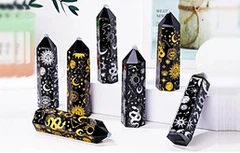



Crystal moon carving is an intricate and beautiful art form that combines the natural allure of crystals with the skill of carving to create unique and enchanting pieces. As a supplier of crystal moon carvings, I've witnessed firsthand the challenges and mistakes that can occur during the carving process. In this blog post, I'll share some of the common mistakes in crystal moon carving, offering insights to help both carvers and enthusiasts understand the intricacies of this craft.
1. Choosing the Wrong Crystal
One of the most fundamental mistakes in crystal moon carving is selecting the wrong type of crystal. Different crystals have varying hardness, cleavage, and inclusions, which can significantly impact the carving process and the final result.
For instance, some crystals are too soft, such as selenite, which has a Mohs hardness of only 2. This makes it prone to scratches and damage during carving, and it may not hold fine details well. On the other hand, extremely hard crystals like diamond, with a Mohs hardness of 10, are difficult to carve without specialized equipment and expertise.
When carving a crystal moon, it's crucial to choose a crystal with the right balance of hardness and workability. Quartz, for example, has a Mohs hardness of 7, making it a popular choice for carving. It can hold intricate details and is relatively easy to work with compared to harder or softer crystals. Additionally, considering the color and clarity of the crystal is essential. A crystal with too many inclusions or a cloudy appearance may not showcase the beauty of the carved moon as intended.
2. Inadequate Planning
Another common mistake is diving into the carving process without proper planning. Carving a crystal moon requires a clear vision of the design, including the shape, size, and details of the moon. Without a well - thought - out plan, carvers may end up making hasty decisions that lead to a less - than - perfect result.
Before starting the carving, it's important to sketch out the design on paper or use a digital modeling tool. This allows the carver to visualize how the moon will look in three dimensions and make adjustments as needed. Factors such as the orientation of the crystal, the placement of light and shadow, and the overall composition should be considered during the planning phase.
For example, if the crystal has a natural shape or a distinctive feature, the design of the moon should complement it. Ignoring these aspects can result in a carving that looks out of place or fails to utilize the crystal's unique qualities.
3. Improper Use of Tools
Using the wrong tools or using them incorrectly is a significant mistake in crystal moon carving. Each stage of the carving process requires specific tools, and using the wrong one can damage the crystal or produce an uneven finish.
Carving tools for crystals typically include diamond - tipped saws, drills, and engraving bits. These tools are designed to cut and shape the hard surface of the crystal without causing excessive chipping or cracking. However, if the tools are not sharp or are used at the wrong speed, they can create rough edges or uneven surfaces.
For instance, when using a diamond - tipped saw to cut the crystal, the blade should be sharp and the cutting speed should be adjusted according to the hardness of the crystal. Using a dull blade or cutting too quickly can cause the crystal to crack or break. Similarly, when using an engraving bit to add details to the moon, the pressure and depth of the engraving need to be carefully controlled to achieve a smooth and precise finish.
4. Over - Carving
Over - carving is a mistake that can easily occur, especially for inexperienced carvers. It involves removing too much material from the crystal, resulting in a thin or weak structure that may break easily or lose its intended shape.
When carving a crystal moon, it's important to work gradually and make small, controlled cuts. This allows the carver to maintain control over the shape and thickness of the moon. It's also a good idea to leave some extra material in the early stages of carving and refine the details later.
For example, if the carver is trying to create a thin crescent moon, removing too much material too quickly can cause the moon to become too fragile. Instead, starting with a slightly thicker shape and gradually thinning it out while ensuring its structural integrity is a better approach.
5. Ignoring Safety Precautions
Safety should never be overlooked in crystal moon carving. Working with crystals and sharp tools can be dangerous if proper safety precautions are not taken.
Carvers should always wear protective gear, such as safety glasses, gloves, and a dust mask. Crystals can produce fine dust particles when carved, which can be harmful if inhaled. Additionally, safety glasses protect the eyes from flying debris, and gloves prevent cuts from sharp tools.
It's also important to use tools in a well - ventilated area to reduce the risk of inhaling dust. When using power tools, following the manufacturer's instructions and ensuring the tools are in good working condition is essential.
6. Lack of Quality Control
As a supplier, I've seen many cases where carvers neglect quality control during the carving process. This can lead to products with visible flaws or inconsistencies that may not meet the expectations of customers.
Quality control should be an ongoing process throughout the carving. Regularly inspecting the work for any scratches, chips, or uneven surfaces allows the carver to make corrections early on. After the carving is complete, a final inspection should be done to ensure that the moon meets the desired standards.


For example, checking the symmetry of the moon, the smoothness of the edges, and the clarity of the details are all important aspects of quality control. Any imperfections can be addressed through additional sanding, polishing, or minor repairs.
7. Not Considering the Market Demand
In the business of crystal moon carving, not considering the market demand is a significant mistake. As a supplier, understanding what customers are looking for in a crystal moon carving is crucial for success.
Market trends, customer preferences, and price points should all be taken into account. For example, some customers may prefer larger, more elaborate crystal moon carvings, while others may be interested in smaller, more affordable pieces. Offering a variety of sizes, styles, and price ranges can help attract a wider customer base.
Additionally, staying updated on the latest trends in crystal carvings, such as Silver Obsidian Carvings, Pink Crystal Carvings, or Crystal Goddess Carving, can give suppliers an edge in the market.
Conclusion
Crystal moon carving is a beautiful and rewarding art form, but it comes with its own set of challenges. By avoiding these common mistakes, carvers can create high - quality crystal moon carvings that showcase the beauty of the crystals and the skill of the artist. As a supplier, I'm always looking for partners who understand the importance of these aspects and can produce exceptional products.
If you're interested in purchasing crystal moon carvings or discussing potential partnerships, I encourage you to reach out. I'm eager to engage in meaningful conversations and explore opportunities for collaboration. Whether you're a retailer looking to add unique products to your inventory or an individual seeking a one - of - a - kind crystal moon carving, I'm here to assist you.
References
- "Gemstone Carving Techniques" by John Smith
- "The Art of Crystal Sculpture" by Emily Johnson
- Industry reports on crystal carving market trends


