






In the realm of artisanal craftsmanship, crystal carving stands as a testament to human creativity and the harmonious marriage of nature's beauty with skilled hands. Among the various forms of crystal carvings, Crystal Moon Carving has emerged as a captivating and sought-after art form. As a dedicated supplier of Crystal Moon Carvings, I've witnessed firsthand the remarkable technological advancements that have transformed this ancient craft.
Precision Cutting and Shaping Technologies
One of the most significant technological leaps in Crystal Moon Carving is the advent of precision cutting and shaping tools. Traditional methods relied heavily on manual labor, which, while capable of producing exquisite pieces, was time - consuming and limited in terms of precision. Today, computer - numerical - control (CNC) machines have revolutionized the process.
CNC machines use pre - programmed software to guide diamond - tipped cutting tools with incredible accuracy. This allows for the creation of complex and detailed moon shapes that were once nearly impossible to achieve by hand. The software can be adjusted to create different sizes, curvatures, and surface textures. For example, a smooth, polished surface can be created for a more modern and minimalist look, or a textured surface can mimic the cratered appearance of the real moon.
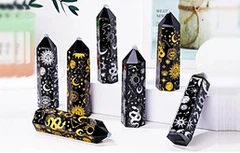
The use of laser cutting technology has also made its mark in Crystal Moon Carving. Lasers can cut through crystal with extreme precision, leaving clean edges and minimal material waste. Laser cutting is particularly useful for creating intricate patterns and designs on the surface of the crystal moon. It can etch delicate lunar landscapes, constellations, or even personalized messages onto the crystal, adding a unique touch to each piece.
Enhanced Polishing Techniques
A key aspect of any crystal carving is its finish, and the advancements in polishing techniques have significantly elevated the quality of Crystal Moon Carvings. In the past, polishing was a labor - intensive process that involved multiple stages of sanding and buffing by hand. This often led to inconsistent results and required a high level of skill.
Modern polishing technologies, such as automated polishing machines, have changed the game. These machines use a combination of abrasive materials and rotating pads to achieve a mirror - like finish on the crystal surface. The automated process ensures uniformity across all pieces, regardless of their size or shape. Additionally, new polishing compounds have been developed that are specifically designed for different types of crystals, enhancing the luster and clarity of the finished product.
For example, when working with Strawberry Quartz Carvings, a specialized polishing compound can bring out the unique pinkish hue and the sparkle of the inclusions within the crystal. This not only enhances the visual appeal of the crystal moon but also showcases the natural beauty of the strawberry quartz.
3D Modeling and Design Software
The integration of 3D modeling and design software has opened up a world of possibilities for Crystal Moon Carving. Designers can now create virtual models of their crystal moon concepts before any physical carving takes place. This allows for greater creativity and experimentation, as designers can easily modify the shape, size, and details of the model with just a few clicks.
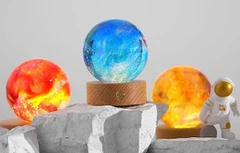
3D modeling software also enables designers to visualize how different lighting conditions will affect the appearance of the crystal moon. They can simulate natural light, artificial light, or even colored light to see how the crystal will interact with it. This is especially important as many Crystal Moon Carvings are intended to be displayed in various lighting settings, such as in a dimly lit bedroom or a well - lit art gallery.
Once the design is finalized in the virtual world, it can be directly transferred to the CNC machines or other carving tools. This seamless integration between design and production ensures that the final physical piece closely matches the original vision of the designer.
Material Selection and Quality Control
Advancements in technology have not only improved the carving and finishing processes but also the selection and quality control of the crystals used in Crystal Moon Carvings. With the help of advanced testing equipment, suppliers can now accurately identify the type, quality, and purity of the crystals.
For instance, spectrometers can analyze the chemical composition of the crystal, ensuring that it is free from impurities that could affect its appearance or durability. X - ray machines can be used to detect internal flaws or fractures in the crystal, allowing suppliers to select only the highest - quality specimens for carving.
This rigorous quality control process is essential for maintaining the reputation of Crystal Moon Carvings. Customers expect a certain level of quality and beauty from these pieces, and by using advanced technology to select and inspect the crystals, suppliers can ensure that each Crystal Moon Carving meets or exceeds those expectations.
The Impact on the Market
The technological advancements in Crystal Moon Carving have had a profound impact on the market. The increased precision and quality of the carvings have made them more appealing to a wider range of customers, from collectors and art enthusiasts to those looking for unique home decor items.
The ability to create personalized and customized Crystal Moon Carvings has also opened up new market segments. Customers can now request specific designs, colors, or inscriptions, making each piece a one - of - a - kind creation. This has led to an increase in demand for Crystal Moon Carvings, both online and in physical stores.
Furthermore, the efficiency gains from the new technologies have allowed suppliers to offer more competitive pricing while maintaining high - quality standards. This has made Crystal Moon Carvings more accessible to a larger audience, driving further growth in the market.
Future Outlook
Looking ahead, the future of Crystal Moon Carving is bright with even more technological advancements on the horizon. We can expect to see further improvements in cutting and shaping technologies, with even greater precision and the ability to work with more complex crystal structures.
The development of new materials and finishes may also expand the creative possibilities for Crystal Moon Carvings. For example, the use of nano - coatings could enhance the durability and scratch - resistance of the crystals, while also adding new visual effects.


As virtual and augmented reality technologies continue to evolve, they may also find their way into the world of Crystal Moon Carving. Customers could use VR or AR to visualize how a crystal moon would look in their own space before making a purchase, or designers could use these technologies to create immersive lunar experiences around their carvings.
Conclusion
In conclusion, the technological advancements in Crystal Moon Carving have transformed this ancient art form into a modern and innovative craft. From precision cutting and shaping to enhanced polishing and design capabilities, these technologies have elevated the quality, creativity, and marketability of Crystal Moon Carvings.
As a supplier of Crystal Moon Carvings, I am excited to be at the forefront of these advancements. We are constantly exploring new technologies and techniques to bring the best possible products to our customers. Whether you are a collector, an art lover, or simply looking for a unique and beautiful piece of decor, our Crystal Moon Carvings offer a perfect blend of nature's beauty and modern craftsmanship.
If you are interested in our Crystal Moon Carvings or would like to discuss a custom order, we invite you to reach out to us for a procurement consultation. We look forward to working with you to create a truly special crystal moon that will be cherished for years to come.
References
- "Modern Techniques in Gemstone Carving" by Gemstone Artisans Journal
- "Advances in Crystal Polishing Technologies" by Materials Science Review
- "The Impact of 3D Modeling on Artisanal Crafts" by Design Innovation Quarterly


