



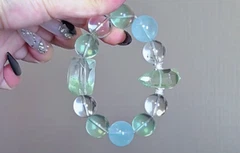

The hardness of crystals used in carvings is a crucial factor that significantly impacts the carving process, the durability of the final product, and the overall aesthetic appeal. As a supplier of crystal carvings, I have extensive experience with various types of crystals and their unique hardness characteristics. In this blog post, I will delve into the concept of crystal hardness, explore different crystals commonly used in carvings, and discuss how hardness affects the carving and usage of these beautiful artworks.
Understanding Crystal Hardness
Crystal hardness is typically measured using the Mohs scale of mineral hardness, which was developed by German mineralogist Friedrich Mohs in 1812. The Mohs scale ranks minerals from 1 (the softest) to 10 (the hardest). Talc, with a hardness of 1, is extremely soft and can be easily scratched by a fingernail. On the other end of the scale, diamond, with a hardness of 10, is the hardest natural substance and can scratch all other minerals.
When it comes to crystal carvings, the hardness of the crystal determines how difficult it is to carve, how well the carving will hold its shape over time, and what tools are required for the carving process. Softer crystals are generally easier to carve but may be more prone to scratching and damage, while harder crystals require more specialized tools and techniques but can result in more durable and long - lasting carvings.
Common Crystals Used in Carvings and Their Hardness
Quartz Crystals
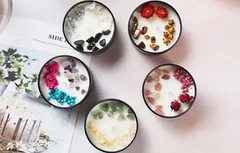
Quartz is one of the most commonly used crystals in carvings. It has a hardness of 7 on the Mohs scale. This makes it relatively hard, which means it can withstand normal handling and is less likely to be scratched compared to softer crystals. Quartz comes in a variety of colors, including clear, white, pink (rose quartz), and purple (amethyst). Our White Crystal Carvings are often made from high - quality white quartz. The hardness of quartz allows for intricate and detailed carvings, as the crystal can hold fine details without chipping or breaking easily.
Black Obsidian
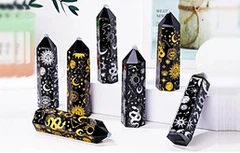
Black obsidian is a volcanic glass with a hardness of about 5 to 5.5 on the Mohs scale. It is a popular choice for carvings due to its smooth, shiny surface and dark, mysterious appearance. Our Black Obsidian Carving pieces are crafted with great care. The relatively lower hardness of obsidian makes it easier to carve compared to quartz. However, it also means that it is more susceptible to scratching. Obsidian carvings need to be handled with care to maintain their pristine appearance.
Calcite
Calcite has a hardness of 3 on the Mohs scale. It is a relatively soft crystal, which makes it very easy to carve. Calcite can be found in a wide range of colors and forms, and it is often used for creating delicate and intricate carvings. However, due to its softness, calcite carvings should be handled gently and protected from abrasion.
Jade
Jade is a term that encompasses two different minerals: nephrite and jadeite. Nephrite has a hardness of about 6 to 6.5 on the Mohs scale, while jadeite is harder, with a hardness of 6.5 to 7.5. Jade is highly prized for its beauty and cultural significance, especially in Asian cultures. It can be carved into a wide variety of shapes, from small figurines to large sculptures. The hardness of jade allows for the creation of detailed and long - lasting carvings.
Impact of Hardness on the Carving Process
The hardness of a crystal directly influences the tools and techniques used in the carving process. For softer crystals like calcite, simple hand tools such as small chisels and files may be sufficient. The carving can be done relatively quickly, and the risk of the crystal breaking during the process is lower.
On the other hand, harder crystals like quartz and jade require more advanced tools. Diamond - tipped tools are often used to carve these crystals, as diamond is the only material harder than them on the Mohs scale. The carving process for hard crystals is more time - consuming and requires a high level of skill and precision. For example, when carving a large jade sculpture, the artist must carefully plan each cut to avoid cracking the crystal.
Durability and Maintenance Based on Hardness
The hardness of a crystal also determines how well the carving will hold up over time. Harder crystals like quartz and jade are more durable and can withstand the test of time. They are suitable for carvings that will be displayed in public areas or handled frequently. For example, a quartz statue in a museum will not easily get scratched or damaged.
Softer crystals, such as obsidian and calcite, need more careful handling and maintenance. They should be kept away from rough surfaces and other hard objects to prevent scratching. A calcite carving, for instance, should be stored in a soft - lined box and handled with clean hands to avoid any damage.


Seasonal and Decorative Carvings
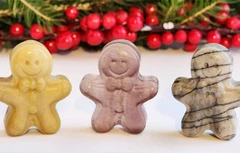
During the holiday season, Christmas Crystal Carvings are in high demand. These carvings can be made from various crystals depending on the design and the desired durability. For example, a Christmas tree carving made from quartz will be more durable and can be reused year after year, while a delicate snowflake carving made from calcite may be more suitable as a one - time decorative piece due to its softness.
Choosing the Right Crystal for Your Carving Needs
When selecting a crystal carving, it is important to consider the intended use of the carving. If you are looking for a carving that will be displayed in a high - traffic area or used frequently, a harder crystal like quartz or jade may be the best choice. However, if you are interested in a more delicate and unique piece that will be handled less often, a softer crystal like obsidian or calcite can offer a different aesthetic appeal.
As a crystal carvings supplier, I can provide you with detailed information about the hardness and characteristics of each type of crystal we use. Whether you are a collector, a decorator, or looking for a special gift, we have a wide range of crystal carvings to meet your needs.
Contact Us for Procurement
If you are interested in purchasing our crystal carvings or have any questions about our products, please feel free to contact us. We are always ready to assist you in finding the perfect crystal carving for your needs. Our team of experts can provide you with more information about the hardness, quality, and design of our carvings. Start a conversation with us today to explore our beautiful collection of crystal carvings.
References
- "The Mineral and Gemstone Kingdom." Various articles on crystal properties and hardness.
- "Gemology: An Introduction to Gem Identification" by Robert E. Webster. This book provides in - depth information on the physical properties of gemstones, including hardness.
- "Crystals and Gemstones: The Definitive Guide" by Judy Hall. A comprehensive guide to different types of crystals, their characteristics, and uses.


