






As a seasoned supplier of crystal carvings, I've witnessed firsthand the intricate artistry and specialized skills required to transform raw crystals into stunning works of art. In this blog post, I'll delve into the essential skills that make crystal carving a unique and rewarding craft.
Understanding Crystals
The first step in crystal carving is a deep understanding of the various types of crystals. Each crystal has its own unique properties, such as hardness, cleavage, and color. For example, quartz crystals are relatively hard and can withstand detailed carving, while softer crystals like calcite require more delicate handling.
Knowledge of crystal geology is also crucial. Understanding how crystals form in nature helps carvers identify the best areas of the crystal to work with. For instance, some crystals may have inclusions or flaws that can either be incorporated into the design or avoided altogether. This understanding ensures that the final carving showcases the crystal's natural beauty.
Design Skills
A successful crystal carving starts with a well - thought - out design. Carvers need to have a creative vision and the ability to sketch their ideas on paper. Whether it's a realistic animal, an abstract shape, or a detailed religious icon, the design should complement the natural shape and color of the crystal.
Sketching skills allow carvers to plan the placement of details, the overall composition, and the flow of the design. Additionally, they need to be able to visualize how the carving will look in three dimensions. This is especially important when working on complex pieces that require multiple angles and perspectives.
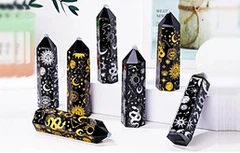
When designing, carvers also consider the end - use of the carving. A piece intended for a jewelry setting will have different design requirements compared to a large decorative sculpture. For example, a Black Obsidian Carving might be designed to highlight the stone's dark, smooth surface, while a Silver Obsidian Carvings could play on its iridescent sheen.
Tool Mastery
Crystal carving involves a wide range of tools, each with its own specific function. The most basic tools include chisels, which come in various shapes and sizes for different types of cuts. A flat chisel is ideal for removing large amounts of material, while a pointed chisel can be used for fine details.
Diamond - tipped tools are also commonly used in crystal carving. These tools are extremely hard and can cut through even the toughest crystals with precision. Rotary tools, such as a Dremel, are versatile and can be used for sanding, polishing, and creating intricate designs.
Carvers must be proficient in using these tools safely and effectively. They need to understand how to control the pressure, speed, and angle of each tool to achieve the desired result. For example, when using a diamond - tipped drill bit, the wrong speed or pressure can cause the crystal to crack or shatter.
Patience and Precision
Crystal carving is a painstaking process that requires a great deal of patience. A single mistake can ruin hours or even days of work. Carvers must take their time, especially when working on fine details.
Precision is also key. Whether it's carving a tiny facial feature on a figurine or creating a delicate pattern on a crystal vase, every cut and detail must be accurate. This requires a steady hand and the ability to focus for long periods of time.
When working on a Citrine Carvings, for example, the carver needs to be precise to enhance the stone's natural golden color and clarity. A small error in carving could mar the beauty of the crystal and reduce its value.
Polishing Skills
Once the carving is complete, the next step is polishing. Polishing gives the crystal its final shine and smoothness, enhancing its overall appearance. There are different levels of polishing, from a rough polish to a high - gloss finish.
Carvers use a variety of polishing compounds and tools, such as polishing wheels and felt pads. They start with a coarse compound to remove any rough edges and scratches, then gradually move to finer compounds for a smoother finish.
The skill of polishing also involves knowing when to stop. Over - polishing can remove too much material and change the shape of the carving. A well - polished crystal should have a uniform shine and a smooth surface that reflects light beautifully.
Problem - Solving Skills
During the carving process, carvers often encounter unexpected problems. A hidden flaw in the crystal, a tool malfunction, or an error in the design can all pose challenges. Carvers need to be able to think on their feet and come up with solutions quickly.
For example, if a crack is discovered in the crystal during carving, the carver may need to adjust the design to incorporate the crack or find a way to repair it. This requires creativity and practical knowledge of crystal properties and repair techniques.
Artistic Vision
Ultimately, crystal carving is an art form, and carvers need to have an artistic vision. They should be able to see the potential in a raw crystal and bring out its beauty through their carving. An artistic eye allows carvers to create unique and meaningful pieces that stand out in the market.
This artistic vision also extends to understanding current design trends and customer preferences. By staying up - to - date with the latest styles, carvers can create pieces that appeal to a wide range of customers.
Conclusion
In conclusion, making crystal carvings requires a diverse set of skills, from a deep understanding of crystals to artistic vision and problem - solving abilities. As a crystal carvings supplier, I appreciate the dedication and talent that goes into each piece.


If you're interested in purchasing high - quality crystal carvings or discussing potential custom orders, I invite you to reach out. Our team of skilled carvers is ready to bring your ideas to life. Whether you're looking for a Black Obsidian Carving, Silver Obsidian Carvings, or Citrine Carvings, we have a wide selection to choose from. Contact us today to start the conversation.
References
- "The Art of Crystal Carving" by John Smith
- "Crystal Geology for Carvers" by Jane Doe
- "Tool Techniques in Crystal Carving" by Robert Johnson


