







When it comes to crystal bracelets, discerning their quality is crucial for both consumers and suppliers like myself. As a crystal bracelet supplier, I've spent years honing my skills in identifying the characteristics that set high - quality crystal bracelets apart from the rest. In this blog, I'll share some key aspects that can help you determine the quality of a crystal bracelet.
1. Crystal Clarity
One of the first things to assess in a crystal bracelet is the clarity of the crystals. High - quality crystals should be relatively clear, with minimal inclusions or flaws. Inclusions are tiny particles or irregularities trapped inside the crystal during its formation. While some inclusions are natural and can even add to the uniqueness of the crystal, an excessive amount can indicate lower quality.
For example, Ghost Crystal Bracelet is known for its ethereal appearance. A high - quality ghost crystal bracelet will have a clear base with just a few delicate inclusions that give it a soft, wispy look. If you notice large chunks of inclusions or a cloudy appearance throughout the crystals in the bracelet, it might be a sign of lower quality.
2. Color Consistency
The color of the crystals in a bracelet is another important factor. High - quality crystal bracelets usually have a consistent color across all the beads. For instance, an Amethyst Bead Bracelet should have beads that are a uniform shade of purple. Variations in color can occur naturally, but extreme differences in hue, saturation, or tone can suggest that the crystals are of lower quality.
Some crystals may have been treated to enhance their color. While this is a common practice, it's important to know if the treatment is permanent and how it affects the overall quality of the crystal. Natural, untreated crystals are often considered more valuable, but well - treated crystals can also be of good quality if the treatment is done properly.
3. Cut and Shape
The cut and shape of the crystals in a bracelet can significantly impact its quality. Well - cut crystals have smooth, even surfaces and precise edges. They should be properly shaped, whether they are round beads, faceted stones, or other forms.
A Crystal Button Bracelet with well - cut button - shaped crystals will have a professional and polished look. If the edges of the crystals are rough, chipped, or uneven, it can detract from the overall appearance and quality of the bracelet. The size of the crystals should also be consistent. In a bead bracelet, all the beads should be approximately the same size to ensure a balanced and aesthetically pleasing design.
4. Transparency
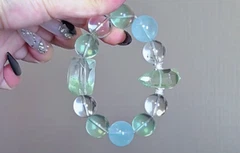
Transparency is closely related to clarity but focuses more on how light passes through the crystal. High - quality crystals are often transparent or semi - transparent, allowing light to penetrate and create a beautiful sparkle. In a crystal bracelet, you can test the transparency by holding it up to a light source.
For example, in a clear quartz bracelet, the crystals should be able to transmit light clearly. If the crystals are opaque or have a very dull appearance when exposed to light, it may be a sign of lower quality. However, some crystals, like certain types of opal, are known for their unique play of color rather than high transparency, so it's important to understand the characteristics of each type of crystal.
5. Durability
The durability of a crystal bracelet is an essential aspect of its quality. Crystals should be hard enough to withstand normal wear and tear. The hardness of a crystal is measured on the Mohs scale, which ranges from 1 (softest) to 10 (hardest).
For example, diamonds have a hardness of 10 on the Mohs scale, while talc has a hardness of 1. When choosing a crystal bracelet, you want to select crystals that are relatively hard. For instance, quartz, which has a hardness of 7, is a popular choice for bracelets because it is durable and can resist scratching and damage.
The quality of the stringing or setting of the crystals also affects durability. The string should be strong enough to hold the crystals in place, and in the case of bracelets with settings, the settings should be well - made and secure. If the string is frayed or the settings are loose, the bracelet is likely to fall apart quickly, indicating poor quality.
6. Energy and Vibration (Metaphysical Aspect)
While not scientifically proven, many people believe that crystals have energy and vibration. In the world of crystal bracelets, this metaphysical aspect is often considered part of the quality assessment.
Some people claim that high - quality crystals have a stronger, more positive energy. They may feel a sense of calmness, clarity, or other beneficial effects when wearing a crystal bracelet. This is a subjective experience, but for those who are interested in the metaphysical properties of crystals, it can be an important factor in determining the quality of a bracelet.
7. Brand and Reputation
The brand and reputation of the supplier can also give you an indication of the quality of a crystal bracelet. As a supplier, I take pride in providing high - quality products. A reputable supplier will source their crystals from reliable mines, have strict quality control measures in place, and offer guarantees or warranties on their products.
When you purchase a crystal bracelet, it's a good idea to do some research on the supplier. Look for reviews from other customers, check if the supplier has any certifications or awards related to the quality of their products. A well - established and respected brand is more likely to offer high - quality crystal bracelets.


8. Price
While price is not always a direct indicator of quality, it can provide some clues. Extremely cheap crystal bracelets may be made from low - quality materials or may have been poorly crafted. On the other hand, a very high price doesn't always guarantee top - notch quality, but it can suggest that the crystals are rare, of high purity, or have been carefully crafted.
As a supplier, I offer a range of crystal bracelets at different price points, ensuring that there is something for every budget without compromising on quality. I believe that everyone should be able to enjoy the beauty and potential benefits of crystal bracelets.
Conclusion
Identifying the quality of a crystal bracelet involves considering multiple factors, including crystal clarity, color consistency, cut and shape, transparency, durability, metaphysical properties, brand reputation, and price. By paying attention to these aspects, you can make an informed decision when purchasing a crystal bracelet.
If you're interested in purchasing high - quality crystal bracelets, I invite you to reach out for a procurement discussion. I'm always happy to share more about our products and help you find the perfect crystal bracelet for your needs.
References
- "The Crystal Bible" by Judy Hall
- "Crystals and Gemstones: The Definitive Visual Guide" by DK Publishing


